

Establishing a strict legal AI governance framework is the most critical technical priority for managing partners and IT directors in 2026. In this rapidly evolving technological landscape, law firms are no longer debating whether they should adopt artificial intelligence. The reality is that your associates, paralegals, and administrative staff are already using it. When these tools are adopted informally without institutional oversight, they create a highly dangerous digital environment known as Shadow IT. Unapproved consumer applications are quietly processing highly sensitive client data on a daily basis. This exposes your practice to severe malpractice and compliance risks.
Recent industry analysis shows that over 68% of legal professionals have used unapproved AI tools at least once in the past year. Despite this, less than 20% of firms have formal policies in place to manage this exposure and protect their reputation.
Table of Contents
The Hidden Threat of Shadow AI in Legal Operations
Shadow IT occurs whenever employees bypass the IT department to use third-party software to complete their tasks. In the modern legal sector, this often looks like an associate feeding a lengthy brief into a public language model to summarize a deposition quickly. While the immediate efficiency gains are tempting, the long-term consequences of unmanaged AI security are disastrous.
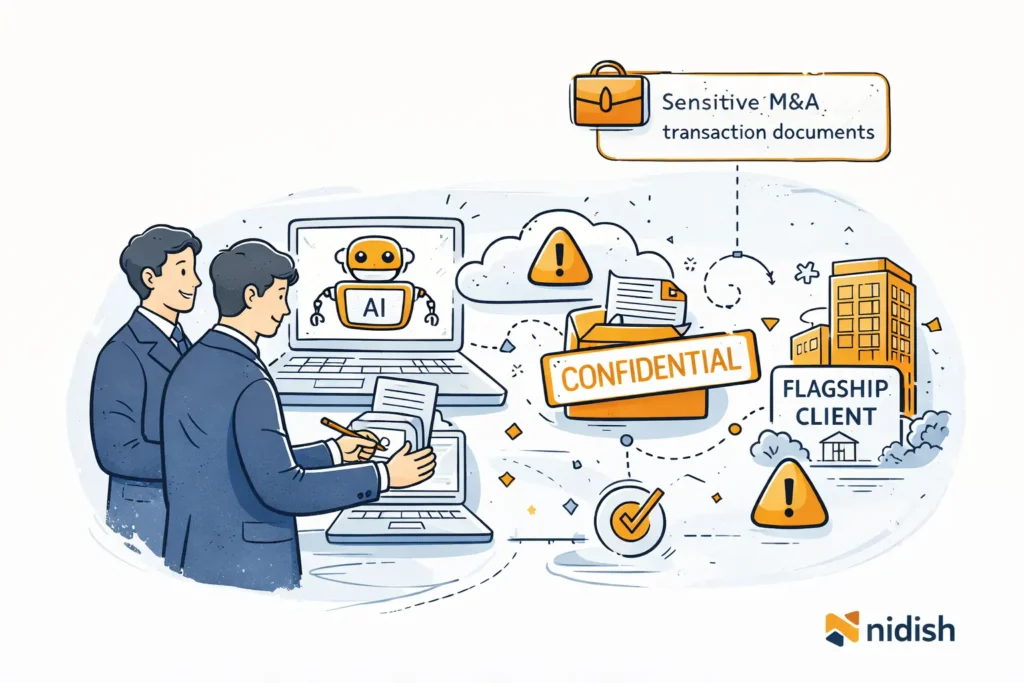
Consider a recent scenario. A mid-sized corporate law firm discovered that multiple associates were using public AI tools to summarize complex M&A documents. Within weeks, sensitive deal data had been exposed to external systems. This created a direct breach of confidentiality agreements and risked the firm’s standing with a flagship client. This situation highlights why auditing Shadow IT in law firms is no longer a luxury. It is a fundamental requirement for protecting client confidentiality in AI.
Why You Need a Formal Technology Audit Today
Many established firms operate under the false assumption that their existing cybersecurity policies adequately cover new technological advancements. However, traditional firewalls do not prevent an employee from copying and pasting text into an unsanctioned browser application. A comprehensive technical audit is the necessary first step in establishing true legal AI governance. It allows firm leadership to uncover exactly which unvetted applications are currently active and hidden within different practice groups.
Once you have clear visibility into these undocumented workflows, you can begin the process of replacing them with enterprise-grade legal AI infrastructure. This shift ensures your team has safe, sanctioned alternatives that are securely hardwired into your existing database and billing systems.
How to Implement Legal AI Governance in Law Firms
Transitioning from a vulnerable state to a highly secure operating model requires a systematic and strategic approach. Just as you would perform a RevOps audit to find leaks in your sales pipeline, you must audit your digital workspace to ensure law firm compliance.
Discovery and Workflow Mapping
This audit must begin with a zero-blame discovery phase. Associates must feel comfortable disclosing the tools they rely on so you can map the entire lifecycle of a document.
Risk Assessment and Data Siloing
Determine if client information is leaving your private servers and identify the specific vulnerabilities created by each unauthorized application.
Implementing an Approved Technical Stack
Establishing a secure, approved software ecosystem is the cornerstone of proactive legal AI governance. According to the latest Legal AI Vendor Report 2026, firms that consolidate their AI tools into a single, unified platform reduce their “Shadow IT” surface area by over 60%.
Building the Infrastructure with Nidish
While defining a governance framework is critical, execution is where most firms struggle. Translating policy into secure, integrated systems requires deep technical expertise that most internal IT teams are not structured to deliver.
Nidish acts as your silent technical powerhouse. We specialize in the deep, structural engineering required to enforce strict legal AI governance across your entire organization. Our team builds the custom API connections and [automated document generation] workflows that allow your secure tools to communicate flawlessly with your central management and financial systems.
Because we operate heavily as a white-label partner, confidentiality and modularity are built into our foundation. We design intelligent systems that sit completely in the background. This allows your attorneys to experience a faster workspace while firm leadership gains the peace of mind that comes with total operational compliance.
Protecting Your Most Valuable Asset
In the legal profession, trust is your ultimate currency. A single data breach caused by an unapproved consumer application can destroy decades of carefully built brand equity. Implementing comprehensive legal AI governance is no longer an optional IT project. It is a fundamental requirement for risk management and sustainable growth.
If your firm has not conducted a Shadow IT audit yet, you are already operating at risk. Book a confidential audit with our team today to identify hidden vulnerabilities and implement a secure, AI-ready infrastructure tailored to your practice.



 Blog
Blog Case Studies
 Career