
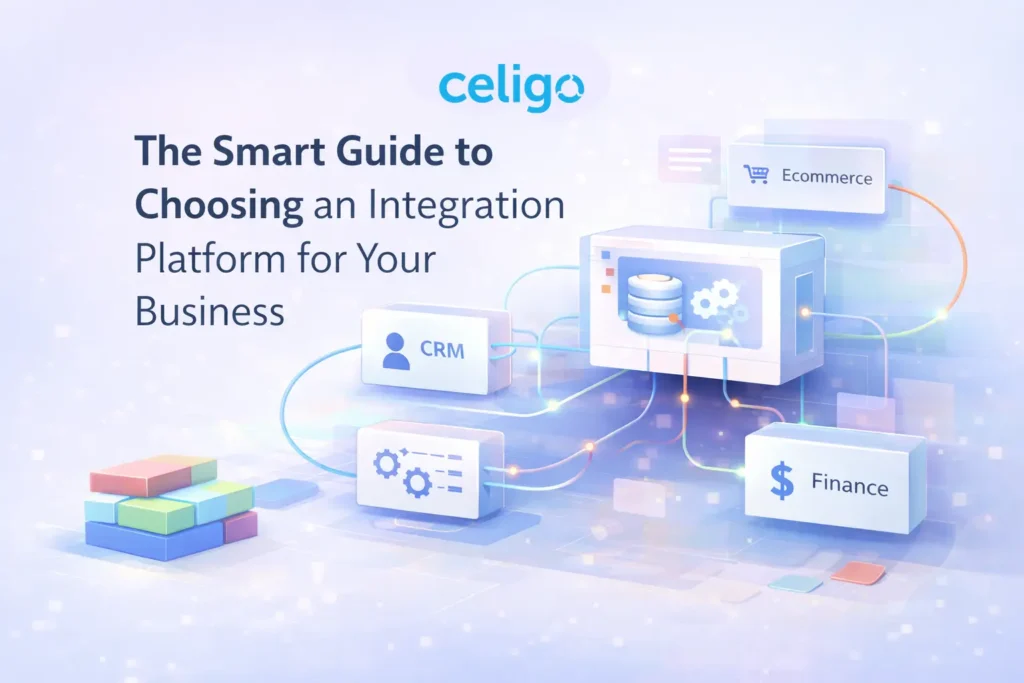
As businesses scale, their technology ecosystem becomes more complex. A CRM here, an ERP there, finance tools, eCommerce platforms, HR systems, and custom applications often operate in isolation. While each tool serves a purpose, the lack of proper integration creates operational friction that slows teams down.
This is where Celigo integration services play a critical role. By acting as a central integration layer, Celigo enables businesses to automate workflows, synchronize data, and eliminate manual processes across systems. When implemented strategically, Celigo becomes a foundation for long-term operational scalability.
Table of Contents
The Hidden Cost of Disconnected Systems
Many growing organizations do not immediately notice the impact of disconnected systems. Over time, small inefficiencies compound into larger operational challenges.
Common symptoms include:
- Manual data entry across CRM, ERP, and finance systems
- Inconsistent reporting and delayed insights
- Operational teams spending hours fixing sync errors
- Finance teams struggling with reconciliation
These challenges are rarely caused by poor software choices. More often, they result from the absence of a well-designed integration strategy.
Why Celigo Is a Preferred iPaaS Platform
Celigo is a robust integration platform as a service (iPaaS) designed to connect cloud and on-premise applications through automated workflows. It supports ERP, CRM, eCommerce, accounting, and custom systems within a single integration environment.
What makes Celigo effective is its flexibility. Businesses can leverage prebuilt connectors while still creating custom workflows for complex use cases. However, Celigo delivers its best results when paired with experienced Celigo development services that align integrations with real business processes.
The Role of Professional Celigo Integration Services
Celigo is not a plug-and-play solution for complex operations. Every organization has unique data structures, workflows, and edge cases that must be handled carefully.
Professional Celigo integration services focus on:
- Translating business processes into scalable integration logic
- Designing reliable data flows between systems
- Handling exceptions, failures, and data validation
- Ensuring integrations perform under high transaction volumes
This approach prevents brittle integrations that work temporarily but fail as the business grows.
Automating Core Business Workflows With Celigo
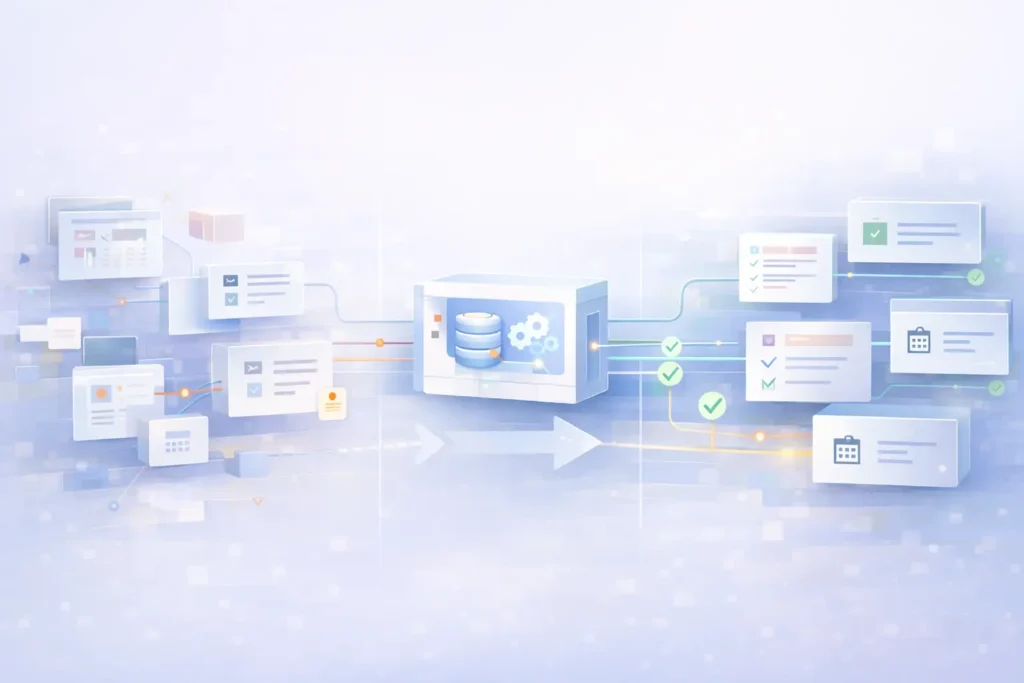
At its core, Celigo enables business process automation by removing manual handoffs and aligning systems around real operational workflows.
Order-to-Cash Automation
Celigo can automate the entire order lifecycle by syncing orders from CRM or eCommerce platforms into ERP systems, triggering invoicing, updating inventory, and passing financial data to accounting tools. This creates faster processing and accurate revenue reporting.
For businesses using CRM platforms like HubSpot alongside ERP systems, integration plays a key role in maintaining data consistency.
You may find this helpful:
👉 HubSpot CRM Integration & Consulting
Lead-to-Cash Alignment
Disjointed sales and finance systems often lead to revenue leakage. Celigo ensures lead and deal data flows smoothly from CRM to downstream systems, improving forecasting accuracy and deal handoff efficiency.
Procure-to-Pay Workflows
Celigo automates procurement workflows by syncing purchase orders, approvals, vendor records, and payments across ERP and finance systems. This reduces bottlenecks and improves operational transparency.
Organizations running ERP platforms like NetSuite often rely on Celigo to manage these workflows efficiently.
👉 NetSuite Integration & Implementation Services
CSV and File-Based Integrations
Not all systems support APIs. Celigo enables secure automation of CSV-based integrations, eliminating manual uploads and reducing human error. This is especially useful for legacy systems or third-party vendors.
Custom Portals and Multi-Environment Deployments
Celigo can serve as the integration backbone for customer or partner portals, ensuring real-time data synchronization with backend systems. Advanced implementations also support separate development, staging, and production environments, reducing deployment risk.
Why Ongoing Celigo Support Matters
Integration is not a one-time setup. As businesses evolve, workflows change, and transaction volumes increase, integrations must adapt.
Ongoing Celigo support and managed services typically include:
- Continuous monitoring of integration flows
- Error handling and proactive issue resolution
- Performance optimization
- Enhancements as business requirements change
Without long-term support, even well-designed integrations can degrade over time.
Choosing the Right Celigo Integration Partner
Technology alone does not solve operational problems. The difference lies in execution. A strategic Celigo partner understands both the technical and business sides of integration.
An experienced partner brings:
- Deep understanding of cross-functional workflows
- Proven experience with ERP, CRM, and finance systems
- Scalable integration architecture design
- Long-term support and optimization mindset
At Nidish, Celigo integration is approached as a business enablement initiative rather than a technical task. The focus remains on reliability, clarity, and measurable outcomes.
How Celigo Fits Into a Scalable Digital Ecosystem
Celigo often works alongside CRM, ERP, and CMS platforms. For businesses migrating or consolidating systems, integration plays a central role in ensuring continuity.
If you are planning system changes, this may be relevant:
👉 HubSpot Migration Services
A well-integrated ecosystem ensures data flows consistently, teams operate from a single source of truth, and leadership gains real-time visibility into operations.
Final Thoughts
As businesses continue to adopt specialized software across departments, integration becomes the foundation that holds everything together. Celigo integration services provide the structure needed to automate workflows, reduce manual effort, and scale operations without chaos.
With the right strategy, development expertise, and ongoing support, Celigo becomes more than an integration tool. It becomes a growth enabler.
Ready to Simplify Your Integrations?
If your teams are spending too much time managing data between systems, it may be time to move beyond manual workarounds. Our Celigo integration specialists help businesses design, build, and support scalable automation that actually works in real-world operations.
👉 Talk to a Celigo Integration Expert



 Blog
Blog Case Studies
 Career